
By Thrive Family Dentistry of Auburn | June 10, 2025
Let’s be honest — nobody wants to hear that they need a root canal. But here is the thing: for older adults dealing with a stubborn toothache or a persistent sensitivity that just will not go away, root canal therapy is often the treatment that finally brings real relief. It is not something to fear. In many cases, it is the most straightforward path back to comfort and a healthy mouth.
At Thrive Family Dentistry, Dr. Rachael Cross and the care team work with patients of all ages, including seniors who have questions, concerns, or a bit of anxiety about what the process involves. This guide is here to walk you through everything you need to know, from why older adults tend to need this treatment more often to what recovery actually looks like day to day.
Why Older Adults Experience More Tooth Infections
Here is something worth understanding: tooth infection in older adults is rarely random. They tend to be the result of decades of gradual changes happening inside and around the teeth.
Over time, enamel naturally wears down. Gums may pull back slightly, exposing parts of the tooth root that were never meant to face the open mouth environment. Old fillings, crowns, or small undetected cracks can create tiny entry points for bacteria. Once bacteria reach the pulp — the soft inner tissue of the tooth that contains nerves and blood vessels — an infection takes hold. And unlike a cold or a minor cut, a tooth infection does not simply clear up on its own. Without treatment, it progresses.
There is another factor worth mentioning. Many medications commonly prescribed to older adults — including certain blood pressure drugs and antidepressants — reduce saliva flow as a side effect. Saliva is one of the mouth’s natural defenses against decay. When there is less of it, bacteria thrive more easily, and the risk of developing cavities that can reach the pulp increases. Periodontal disease also plays a role. When gum tissue recedes due to gum disease, the root of the tooth becomes exposed and vulnerable to bacterial attack. Left unaddressed, this can eventually lead to pulp infection. This is why staying on top of routine preventive care matters so much — catching these issues early makes a significant difference in what treatment options are available.
What Happens During Root Canal Therapy
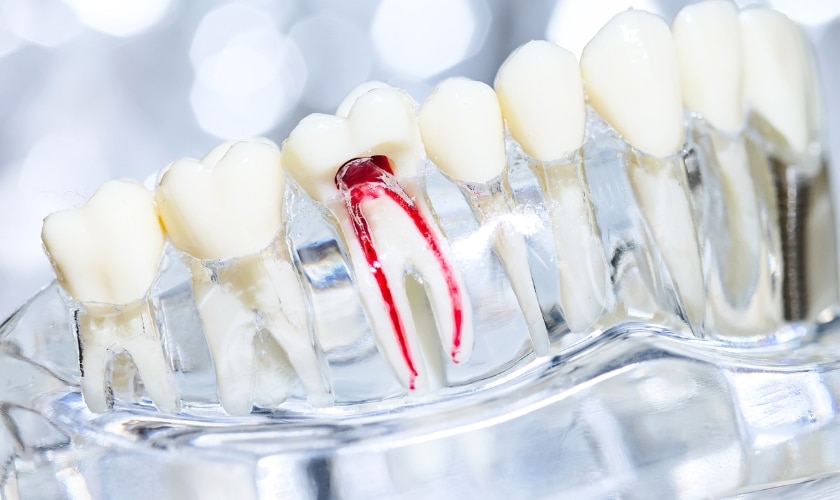
Root canal therapy, sometimes called endodontic treatment, sounds more intimidating than it actually is. At its core, the procedure is about removing the source of the problem, cleaning the area thoroughly, and sealing the tooth so the infection cannot return.
Here is how it unfolds at Thrive Family Dentistry. The appointment starts with a comprehensive exam and digital imaging so Dr. Cross can see exactly what is happening inside the tooth and surrounding bone. Before anything else begins, local anesthesia is administered to ensure comfort throughout the procedure. Once the area is numb, the infected or damaged pulp is carefully removed. The canals inside the tooth are then cleaned, shaped, and filled with a safe, biocompatible material. To finish, a dental crown is placed over the tooth — this step restores the tooth’s strength, protects it from future fracture, and brings it back to full chewing function.
For most patients, the entire process is completed in one or two visits. The tooth looks, feels, and functions like a natural tooth because it is one.
The Real Benefits for Seniors — and Why They Matter
Older adults stand to gain quite a bit from choosing root canal therapy over other options.
- It puts an end to the pain. The persistent ache, the sensitivity when drinking something warm, the throbbing that interrupts sleep — all of that is caused by the infection inside the tooth. Root canal therapy removes that infection, which means the pain goes with it. Most patients are genuinely surprised by how much better they feel after treatment.
- It keeps eating comfortably and is nutritious. Natural teeth chew the way they are supposed to. When a tooth is lost, certain foods become difficult or impossible to manage — and for older adults, that can have a real impact on nutrition. Keeping the natural tooth in place means continuing to eat a varied, healthy diet without restriction.
- It protects the rest of the mouth. Each tooth plays a supporting role for the teeth around it. When one is removed, neighbors begin to drift, bite alignment shifts, and the jawbone at the gap can start to shrink over time. Preserving the natural tooth with a root canal sidesteps all of that.
- It stops the infection from going further. Oral infections have a way of spreading. What starts in one tooth can move into the surrounding bone and, in more serious cases, affect other areas of the body. The American Association of Endodontists notes that root canal treatment is highly effective at eliminating infection and preventing its spread. Treating the problem early is always the wisest approach.
How Senior Care at Thrive Family Dentistry is Different
Treating an older adult is not the same as treating a younger patient, and the team at Thrive Family Dentistry approaches it accordingly.
Before any treatment begins, Dr. Cross takes a thorough look at the patient’s medical history. Conditions like diabetes, heart disease, or osteoporosis can influence how the body heals. Medications may require coordination with the patient’s physician before dental work. These are details that genuinely matter, and they are never overlooked.
There is also a strong emphasis on clear, honest communication. Many older patients appreciate knowing exactly what to expect — step by step — before and during the appointment. The team at Thrive Family Dentistry takes that time, because walking into a procedure feeling informed makes a meaningful difference in how comfortable the experience feels.
Physical comfort during the appointment matters too. Proper chair positioning, carefully calibrated anesthesia, and a calm, unhurried approach all contribute to a better experience for patients who may have specific physical or anxiety-related needs.
Root Canal Therapy or Tooth Extraction – Which One Makes Sense?
This is one of the most common questions that comes up, and it deserves a straightforward answer. While tooth extraction might seem like the simpler or quicker fix, removing a tooth almost always creates new problems that need to be addressed down the road. Bone loss begins at the extraction site relatively quickly. Adjacent teeth start to drift toward the gap. Eventually, replacing the missing tooth, whether with a dental implant, a bridge, or a partial denture, involves its own procedures, costs, and adjustment periods.
Warning Signs to Watch For
A few symptoms are worth watching for. If you notice any of the following, reach out to Thrive Family Dentistry sooner rather than later.
- A toothache that lingers or worsens when you bite or chew.
- Sensitivity to heat or cold that stays with you long after the food or drink is over.
- Swollen, tender, or red gum tissue near a specific tooth.
- A tooth that appears darker or greyish compared to those around it
- A small raised bump on the gum, much similar to a pimple.
Taking Care of a Treated Tooth
Recovery from root canal therapy is usually smooth. A day or two of mild soreness is normal, and most patients manage it comfortably with over-the-counter pain relievers. It is best to avoid chewing on the treated tooth until the permanent crown is in place, simply to protect it during the healing window.
Once the crown is seated and the treatment is complete, caring for the tooth is no different from caring for any other tooth. Brushing twice a day, flossing daily, and keeping up with regular checkups at Thrive Family Dentistry are the habits that keep it healthy long-term.
Ready to Take the Next Step?
Tooth pain does not have to become a permanent part of your daily life. Whether you are dealing with a dull ache that has been around for weeks or a sudden, sharp pain that has just appeared, the right place to start is a conversation with Dr. Rachael Cross. Flexible insurance and financing options to make treatment accessible.
Frequently Asked Questions
Is root canal treatment safe for older adults?
Yes. With proper evaluation, root canal treatment is safe and effective for seniors.
Does a root canal hurt for seniors?
No. Local anesthesia and modern techniques make the procedure comfortable.
How long does a root canal-treated tooth last?
With good oral hygiene and a crown, the tooth can last many years.
Can a root canal help seniors avoid tooth extraction?
In many cases, yes. A root canal often saves teeth that would otherwise be removed.